OS/RTOS migration
Change your OS target without rewriting your drivers
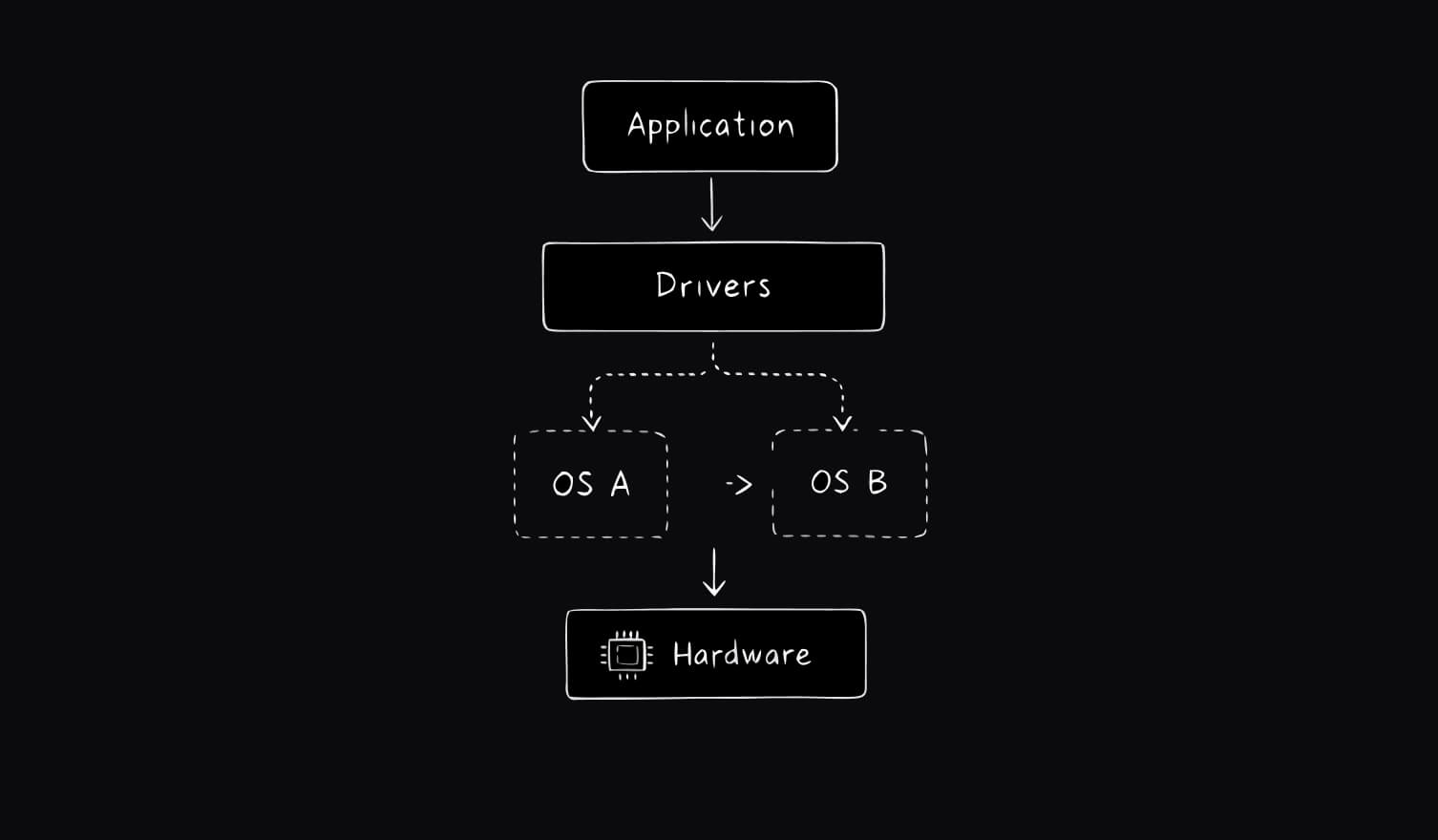
Moving from bare metal to an RTOS, or from one RTOS to another, shouldn't mean redeveloping every driver. Embedd regenerates your BSP for the new target — same hardware model, new integration layer.
The Problem
OS migrations touch every layer of the BSP. Interrupt handling, memory management, task scheduling, and peripheral access all change. Even when the hardware stays the same, the driver code is deeply entangled with the OS — so switching from bare metal to FreeRTOS, or from FreeRTOS to Zephyr, means rewriting most of the BSP. Teams either absorb months of rework or avoid the migration entirely, even when the new OS is clearly the better choice.
How Embedd Solves It
Embedd's Digital Twin captures hardware behaviour independently of the OS. The register definitions, action sequences, and peripheral logic remain stable. When you select a new OS target, the generation engine produces the correct integration layer — interrupt hooks, memory management patterns, scheduling primitives — for that environment. The hardware configuration doesn't change because the hardware didn't change.
What You Get
Complete BSP regenerated for the new OS target
Hardware configuration preserved — no re-modelling, no re-validation of peripheral behaviour
OS-specific integration layer generated to match the target's conventions
Migration timeline measured in days, not months
Who This Is For
Teams moving to a new RTOS for technical or commercial reasons. Product lines that need to support multiple OS targets from the same hardware platform.