BSP migration
Migrate to new hardware without rewriting your BSP
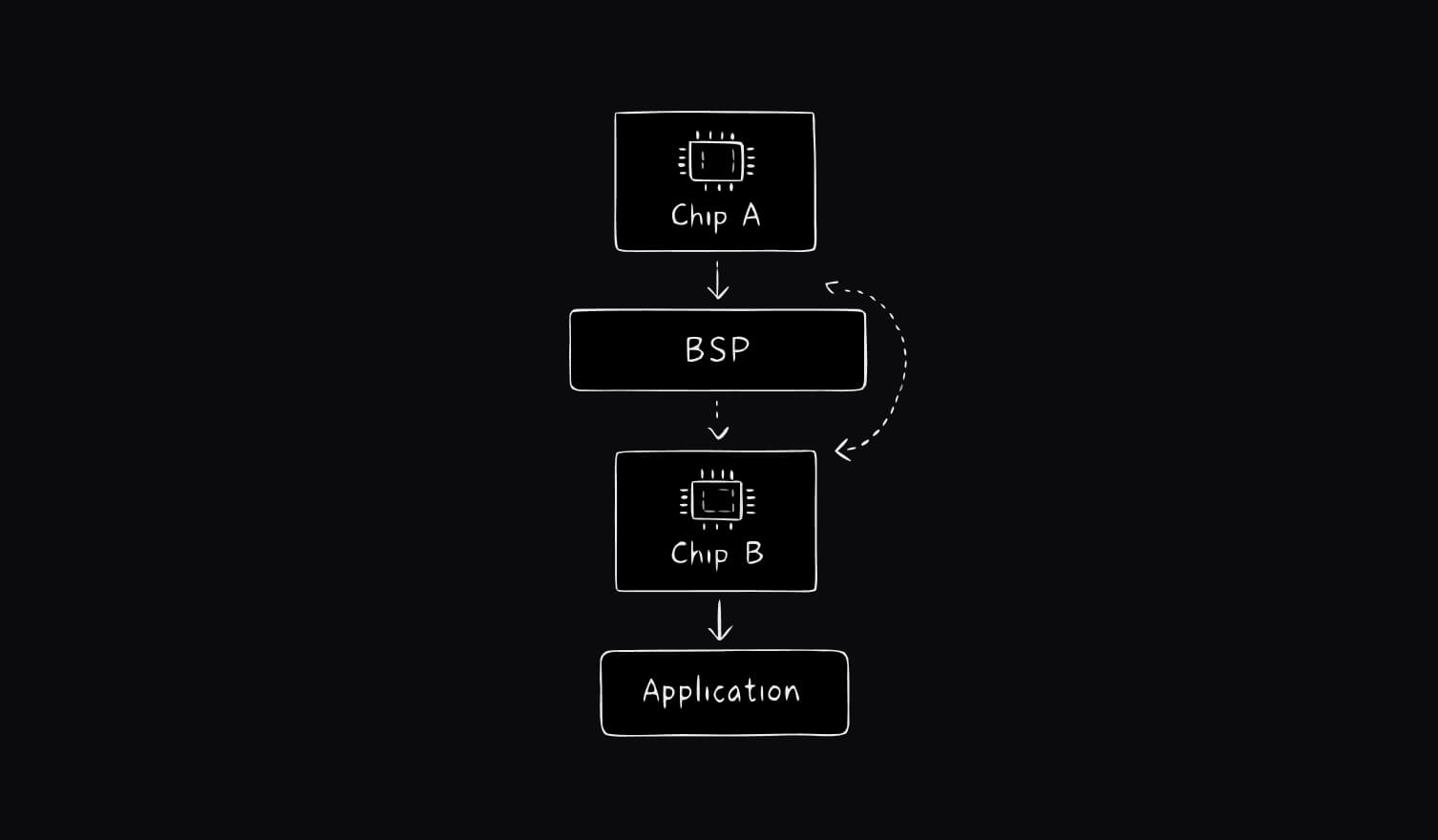
When you change MCU/MPU or peripheral suppliers - whether for cost, availability, or performance - the BSP rewrite is usually the biggest cost and risk. Embedd makes hardware migration a regeneration task, not a rewrite project.
The Problem
Switching silicon vendors or MCU/MPU families triggers a cascade: new register maps, new peripheral behaviours, new vendor SDKs, new timing constraints. The existing BSP is effectively worthless - your team starts over, often spending as much time as the original development. The cost makes migrations hard to justify, even when the business case for new hardware is clear.
How Embedd Solves It
Embedd's Digital Twins separate hardware logic from software implementation. When you move to a new MCU or peripheral, the device class patterns and driver architecture remain stable - only the hardware-specific model changes. Embedd processes the new chip's documentation, maps it to the existing driver structure, and regenerates. Your team validates the output rather than writing from scratch.
What You Get
New BSP for the target hardware, generated from the Digital Twin
Stable API surface - application code and test suites carry over without modification
Side-by-side validation: old and new drivers share the same architecture, making comparison straightforward
Migration cost typically 70–85% lower than manual rewrite
Who This Is For
Teams evaluating alternative suppliers for cost reduction or supply chain resilience, but held back by the BSP rewrite cost. Engin