New product BSP
New product development without BSP headache
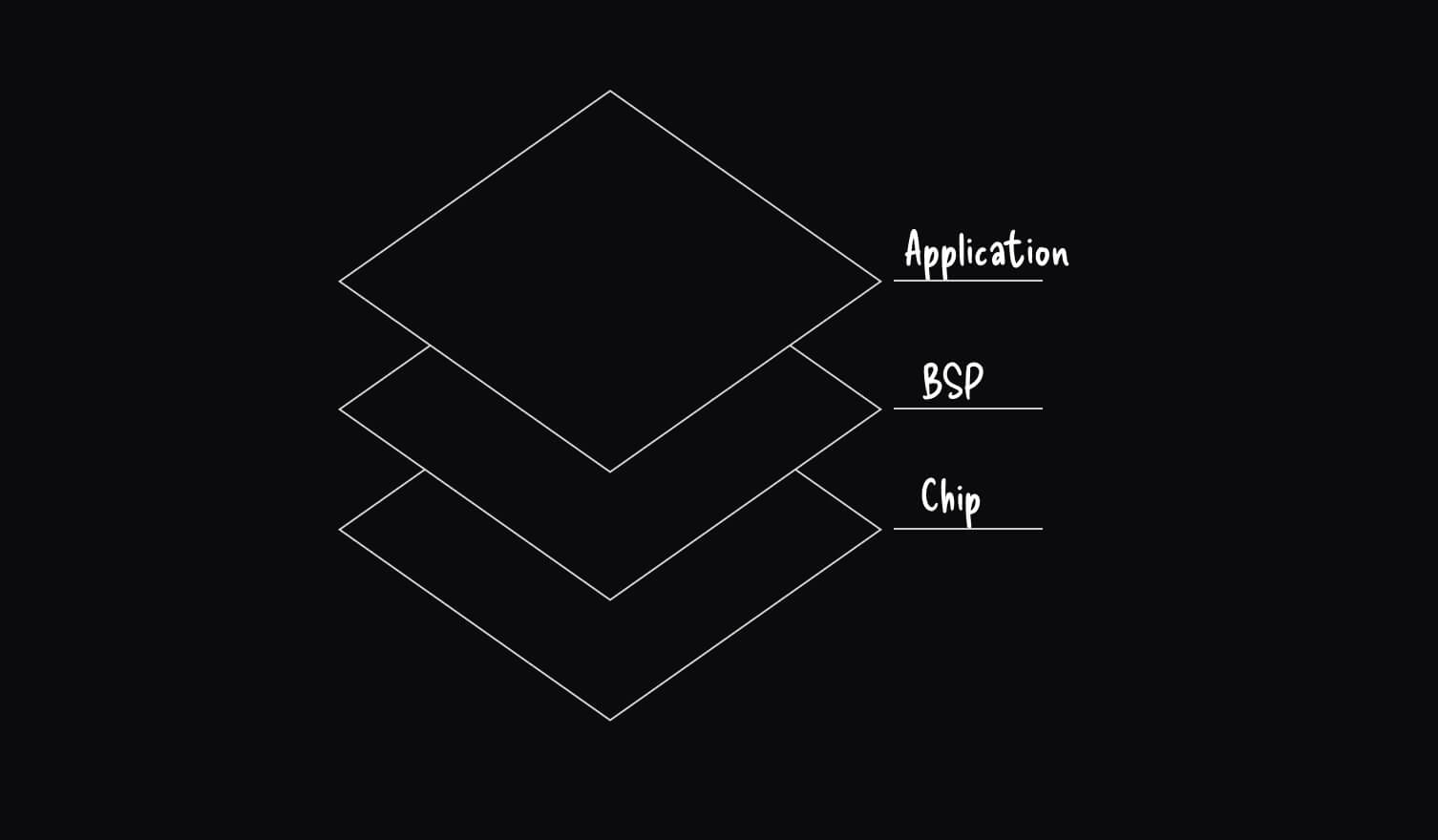
Every new product means a new combination of MPU/MCU, peripherals, and OS - and weeks or months of driver development before the application team can begin. Embedd compresses that timeline from months to days.
The problem
New product development is blocked by BSP readiness. The hardware team selects components, then software engineers spend months reading datasheets, writing register definitions, implementing drivers, and debugging on hardware — before any application logic can run. The BSP is on the critical path, and every delay cascades into the program schedule.
Vendor-supplied BSPs only get you part of the way. Silicon vendors provide drivers that work on their evaluation boards - but your product isn't an eval board. The internal MCU subsystems may be covered, but external peripherals on your custom PCB need custom drivers. And the vendor BSP is a black box: their code, their structure, their conventions. When issues surface late in a program, you're dependent on the vendor's support timeline, not yours.
How Embedd solves It
Embedd processes the chip documentation for your selected MCU/MPU and peripherals into structured Digital Twins, then generates the complete driver layer and board configuration for your target OS — covering both internal MCU/MPU subsystems and external peripherals on your board. Unlike a vendor BSP, the output is transparent: your team has full visibility into the hardware model and generated code, with no black-box dependency. What would normally require 2–3 engineers working 3–6 months is produced in days with one integration engineer validating the output.
What you get
Production-ready drivers for all board peripherals - MCU/MPU subsystems and external components from one consistent methodology
Validated board configuration (Devicetree or equivalent) for your target OS
Full visibility into the hardware model - no vendor black box, no dependency on external support timelines
A Digital Twin that persists - when the next board revision changes a component, regenerate instead of rewriting
Consistent API surface across the entire BSP, simplifying application development and testing
Who this is for
Engineering teams starting a new product who want the application team unblocked as early as possible. Product managers who need to compress time-to-market without adding headcount.